
If you live anywhere in the UAE—whether you’re commuting along Sheikh Zayed Road in Dubai, grabbing a karak in Sharjah, or heading to work in Abu Dhabi—there’s a good chance you’ve come across the same viral message recently.
It often appears in family WhatsApp groups, job-seeker Telegram channels, or TikTok comments. The message usually makes an attractive promise: sign up for the new UAE Pledge Certificate, download your appreciation certificate, and receive a cash reward ranging from a few hundred dirhams to as much as AED 5,000.
Some posts call it the “UAE Pledge Certificate Reward.” Others describe it as a “Dubai Appreciation Letter Bonus” or claim that the government is offering financial grants to residents who complete a simple five-minute registration.
When living costs are rising, the idea of receiving government-backed financial assistance can sound very appealing.
But there’s an important distinction to understand.
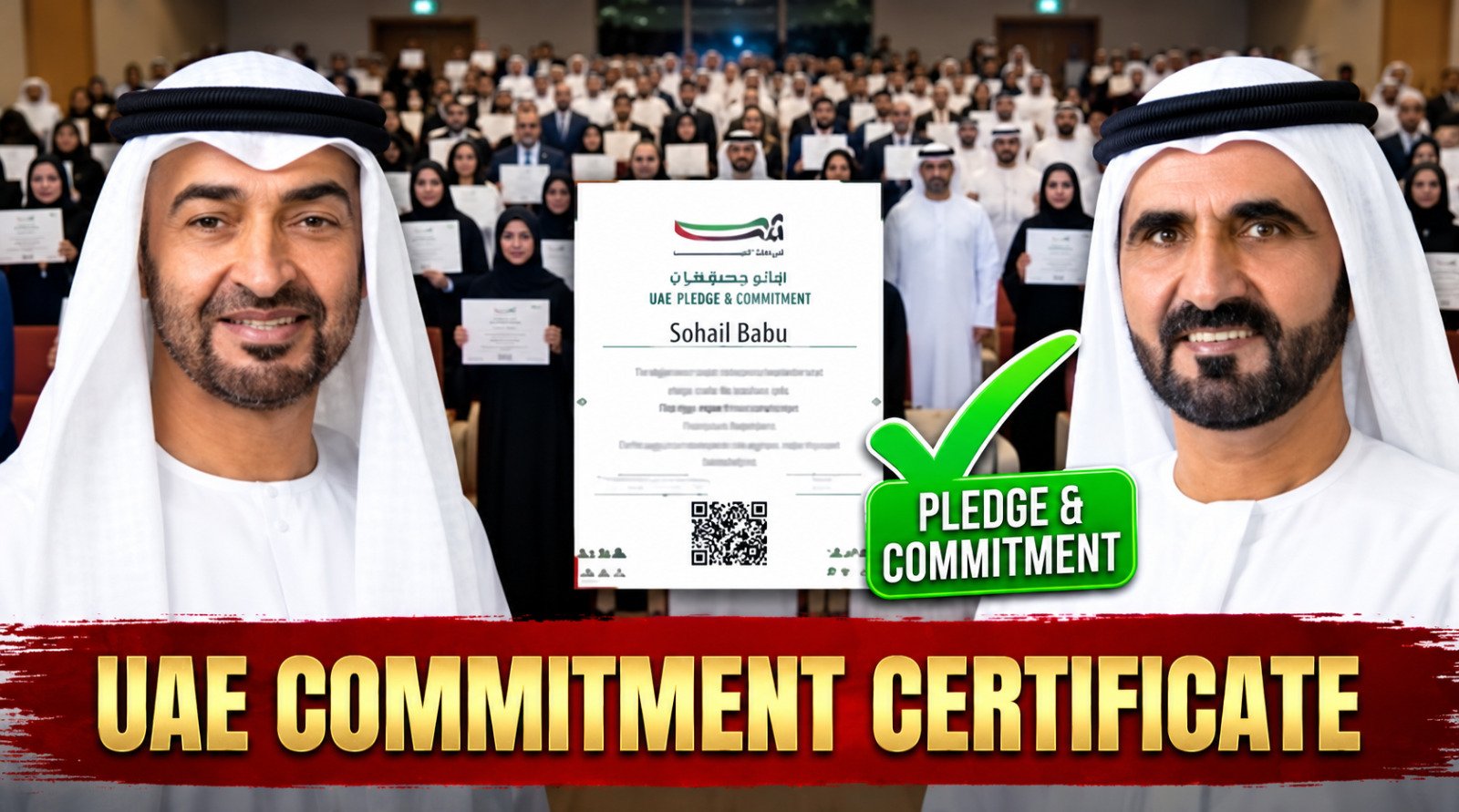
The UAE Pledge Certificate itself is a genuine symbolic initiative. However, the cash reward being promoted alongside it on social media is fake.
There is no legitimate government payment, grocery voucher, lottery prize, or bank transfer simply for downloading the certificate.
The Short Answer: The Real Certificate vs. the Viral Scam
The reason this scam is so convincing is because it is built around something real.
Scammers did not create the UAE Pledge Certificate from nothing. Instead, they took a genuine patriotic campaign and attached a fake financial reward to it. The goal is usually to generate advertising revenue, collect personal information, or direct users toward phishing pages.
| Feature | Real UAE Pledge Initiative | Viral “Reward” Scam |
|---|---|---|
| Official Name | Pledge and Commitment (A Pledge of Loyalty, A Promise of Devotion) | “UAE Pledge Cash Grant,” “Dubai Appreciation Payout,” or “5,000 AED Certificate Bonus” |
| Organizer | Sandooq Al Watan | Unverified websites, WhatsApp spammers, and phishing networks |
| Official Website | pledge.ae | Shortened links, lookalike domains, or ad-heavy redirect pages |
| Cost | Completely free | May request a processing fee or crypto payment |
| Information Requested | Full name and optional email, with up to 10 family members | Emirates ID, passport, bank IBAN, phone number, or UAE Pass OTP |
| What You Receive | A symbolic Certificate of Appreciation in PDF/image format | Potential identity theft, spam, or financial loss |
Understanding this difference can save you both time and money.
If you simply want to show your appreciation for the UAE and receive a commemorative certificate, the genuine platform is straightforward to use. But if you are clicking a link because you expect money to help pay your DEWA bill, rent, or traffic fines, stop before entering any personal information.
What Is the Real UAE Pledge and Commitment Certificate?
To understand where the rumor came from, it helps to look at the actual campaign.
The Pledge and Commitment initiative, associated with the theme of appreciation and gratitude, was launched as a nationwide digital platform by Sandooq Al Watan.
Its purpose is civic and symbolic. It gives both Emirati citizens and expatriate residents across the UAE an opportunity to express their pride, gratitude, loyalty, and sense of belonging to the country and its leadership.
The official platform is available in both Arabic and English. Rather than offering financial rewards, it focuses on several community values, including:
- Preserving national identity and cultural heritage: Recognising the traditions and values that have shaped the UAE.
- Promoting coexistence and tolerance: Celebrating a country where people from more than 200 nationalities live and work together.
- Encouraging positive civic responsibility: Motivating citizens and residents to make meaningful contributions to their communities.
- Supporting the UAE’s long-term vision: Expressing support for the country’s continued development, innovation, and stability.
After reading the pledge and entering your name, the platform generates a personalised Certificate of Appreciation associated with Sandooq Al Watan.
The certificate looks official and is designed as a formal expression of appreciation. As residents began sharing screenshots of their certificates on TikTok, Instagram, Facebook, and other platforms, scammers quickly saw an opportunity.
They began taking genuine certificate screenshots and adding misleading captions such as:
“I just received AED 3,000 after verifying my UAE Pledge Certificate!”
Fake links were then added to comments and social media posts.
How the “Pledge Certificate Reward” Scam Works
Not every website using the “UAE Pledge Reward” name operates in exactly the same way. However, the scams generally fall into two categories: advertising traps and personal-data phishing scams.
1. The Initial Bait on WhatsApp and TikTok
The scam often starts with a message forwarded by a friend, relative, colleague, or member of a community group.
Because the message comes from someone you know, it may initially appear trustworthy.
These messages often include UAE flag emojis, fake government reference numbers, and urgent claims that the reward portal is closing soon.
The goal is simple: make you click before you have time to verify the information.
2. The Fake Landing Page
Instead of taking you to pledge.ae or an official government portal, the link may redirect you to a cloned website, blog, or suspicious domain.
Some of these websites are designed mainly to generate advertising revenue. Visitors may be forced through several pages with messages such as:
- “Click Next to Verify Eligibility”
- “Check Your Emirates ID Status”
- “Confirm Your Reward”
Every additional page view can generate revenue for the website operator.
3. The Personal Data Trap
More dangerous versions of the scam go a step further.
A fake government-style form may ask you to “verify your certificate” before releasing the supposed cash reward.
The information requested can include:
- Full name and UAE mobile number
- Emirates ID number and expiry date
- Passport or residency documents
- Bank name and IBAN
This is where the situation can become much more serious.
Personal information collected through these forms can potentially be used for identity theft, targeted scams, or further phishing attempts.
4. The “Share With Friends” Requirement
Another common tactic is to make the scam appear viral.
A progress bar may stop at around 90%, followed by a message saying something like:
“Share this link with 5 WhatsApp groups or 10 contacts to unlock your AED 2,500 transfer.”
Users may share the link because they believe they are only one step away from receiving the money.
In reality, there may be no reward at all. The sharing requirement simply helps the scam spread to more people.
5. The UAE Pass or Processing-Fee Trap
The most dangerous stage can come after the victim has already submitted their phone number or other information.
Scammers may contact the person through WhatsApp and claim that the reward is ready but requires a small “administrative” or “release” fee.
They may request AED 50–100 or ask for payment through a suspicious payment link or cryptocurrency.
Another tactic involves UAE Pass. A scammer may trigger a login or authentication request and tell the victim to approve it because it is supposedly needed to confirm the grant.
Never approve an unexpected UAE Pass request.
An unknown authentication request should be treated as a potential security threat, not as a routine step for receiving a government benefit.
Why Search Results Can Be Confusing
Searching online for terms such as “UAE government pledge registration” can make the situation even more confusing.
The word “pledge” appears in several legitimate government and commercial services across the UAE and GCC, but these services are unrelated to the viral certificate reward.
Ministry of Economy & Tourism “Register Pledge” Service
The UAE’s official government portals include a service called Register Pledge under the Ministry of Economy & Tourism.
This is completely different from the community appreciation certificate.
The service relates to commercial matters, including registering industrial property or patents as collateral when arranging business financing. It is a formal commercial process and is not connected to any cash reward for signing a pledge.
Saudi Arabia’s GOSI and Najiz Pledge Services
Social media posts sometimes combine UAE and Saudi Arabian services under the same “pledge certificate reward” claim.
Saudi Arabia also has legitimate services that use similar terminology.
For example:
- GOSI Certificate of Commitment: A formal document issued through the General Organization for Social Insurance.
- Najiz Asset Pledges: Services dealing with legal pledges and collateral through the Saudi Ministry of Justice.
Neither service represents a government scheme that pays people simply for signing up.
How to Get the Official UAE Pledge Certificate Safely
If you want the genuine Certificate of Appreciation, the safest approach is to access the official platform directly rather than following links shared on social media.
Step 1: Enter the Website Yourself
Open your browser and manually enter:
pledge.ae
Avoid clicking links received through WhatsApp messages, TikTok comments, or suspicious social media posts.
Step 2: Select Your Language
Choose either Arabic or English.
Step 3: Read the Pledge
Review the declaration and the values it represents.
Step 4: Enter Your Name
Enter your name exactly as you want it displayed on the certificate.
An email address may be available as an optional field for receiving a copy.
Step 5: Add Family Members
The platform allows users to include family members as part of the submission.
Step 6: Generate the Certificate
Submit the form and generate the certificate. You can then download the resulting digital certificate as a PDF or image.
Most importantly, you should notice what isn’t required.
You should not need to provide your Emirates ID, approve an unexpected UAE Pass request, connect your bank card, or pay a fee simply to receive the symbolic certificate.
Looking for Real Financial Assistance in the UAE?
It is easy to understand why these scams attract attention.
Rent, utilities, medical expenses, and everyday living costs can put significant pressure on households. Scammers know that people who are looking for financial assistance may be more willing to click on an offer that promises quick government support.
Instead of relying on viral WhatsApp claims, use established government programmes and licensed charitable organisations.
Possible legitimate sources include:
- Ministry of Community Empowerment and the official UAE government portal: Eligible individuals can check whether they qualify for available social-support programmes through official government channels.
- Involuntary Loss of Employment (ILOE) Insurance: Eligible employees who lose their jobs under qualifying circumstances may be entitled to temporary financial compensation.
- Licensed UAE charities: Organisations such as Dar Al Ber Society, Emirates Red Crescent, and Beit Al Khair provide various forms of assistance to eligible individuals and families.
Always use the organisation’s official website or office when applying for assistance.
Be particularly cautious if anyone asks you to pay an upfront fee to “release” or “approve” financial assistance.
How to Spot a Government-Impersonation Scam
Whenever you see a new government-related offer online, take a moment to verify it before clicking.
Here are five simple checks:
1. Check the Website
Look carefully at the domain name.
Official UAE government websites generally use recognised government domains such as .gov.ae, while established UAE initiatives may use .ae.
Be suspicious of strange domains, shortened links, or websites using unrelated extensions such as .xyz or .top.
2. Look for an Official Announcement
If a government programme is genuinely offering financial assistance, look for confirmation through official UAE government channels, the UAE government portal, WAM, or verified government accounts.
Do not rely solely on a forwarded WhatsApp message.
3. Be Careful With Urgency
Messages claiming things like:
“Only 200 slots left!”
or
“Register before midnight!”
are classic pressure tactics.
Take your time and verify the claim independently.
4. Protect UAE Pass and OTP Codes
Never share an OTP with another person.
Also, do not approve an unexpected UAE Pass authentication request simply because someone tells you it is required to receive a payment.
5. Be Suspicious of Easy Money
If someone claims you can receive thousands of dirhams simply by entering your name on a website, stop and verify the offer.
Legitimate financial-support programmes have eligibility requirements and official application procedures.
What If You Already Clicked the Link or Shared Your Details?
If you have already entered your phone number, Emirates ID, or other information on a suspicious website, don’t panic—but take action quickly.
1. Check Your UAE Pass
Review your active sessions or linked devices. If you notice anything unfamiliar, revoke access and change your security credentials.
2. Contact Your Bank
If you entered card details, banking information, login credentials, or an OTP, contact your bank’s fraud department immediately.
Ask them what protective measures should be taken.
3. Don’t Pay a “Recovery” Fee
If someone contacts you claiming that your reward is ready but requires a processing, customs, or release fee, do not pay.
Block and report the number.
4. Warn Others
If a friend or family member forwarded the suspicious link to you, let them know that the genuine UAE Pledge Certificate is a symbolic initiative and that the cash-reward links circulating online are not part of the legitimate certificate process.
Final Verdict
The UAE Pledge Certificate and the cash-reward claim are two very different things.
The certificate is presented as a genuine symbolic initiative that allows residents and citizens to express appreciation and commitment to the UAE.
The viral promises of AED 2,500, AED 3,000, AED 5,000, or other cash rewards are a completely different matter. Treat them as scams unless you can independently verify the offer through an official government source.
The safest rule is simple:
Don’t click the viral link. Go directly to the official website, verify the information yourself, and never share your UAE Pass approval, OTP, banking details, or Emirates ID with an unverified website or person.